

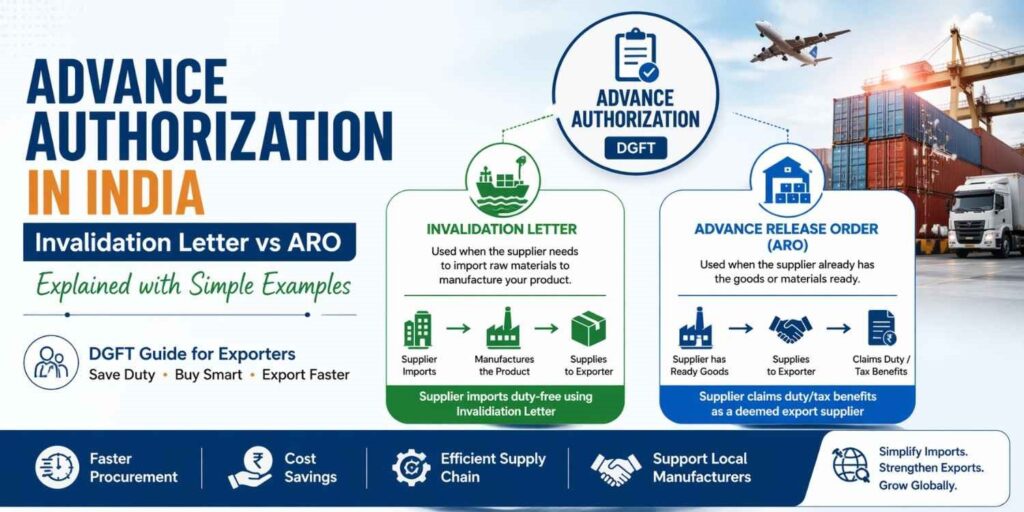
Advance Authorization in India: Invalidation Letter vs ARO Explained with Simple Examples
If you are an exporter in India, you may already be using the Advance Authorization (AA) scheme. This scheme allows you to import raw materials without paying customs duty, as long as you use those materials to make export products.
But here is something many exporters do not know:
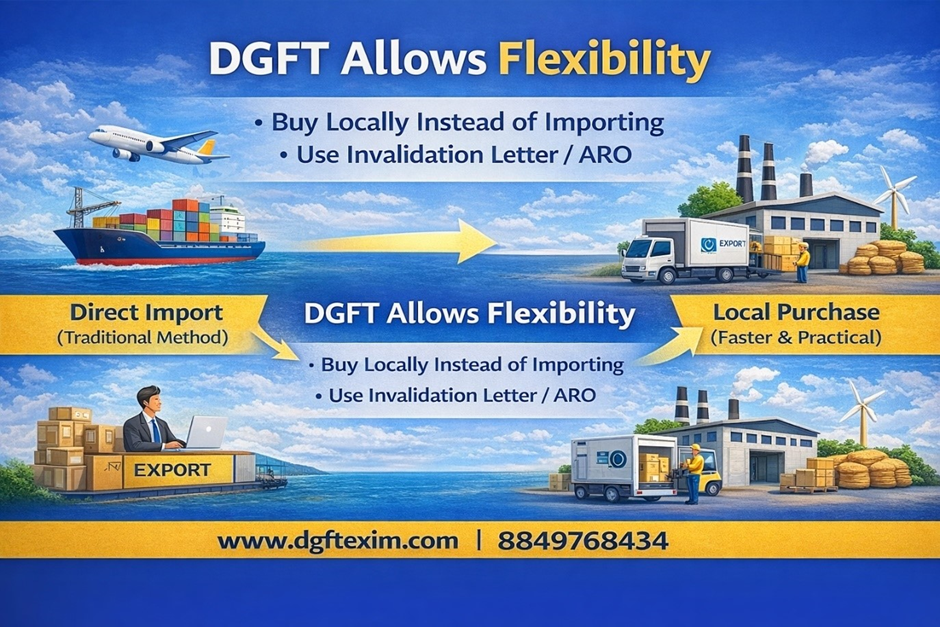
You do not always need to import.
You can also buy from Indian suppliers and still get the same benefit.
For this, the government provides two options under the Directorate General of Foreign Trade system:
- Invalidation Letter
- Advance Release Order (ARO)
This blog explains both in very simple language with examples.
What is Advance Authorization?
What Is an Invalidation Letter?
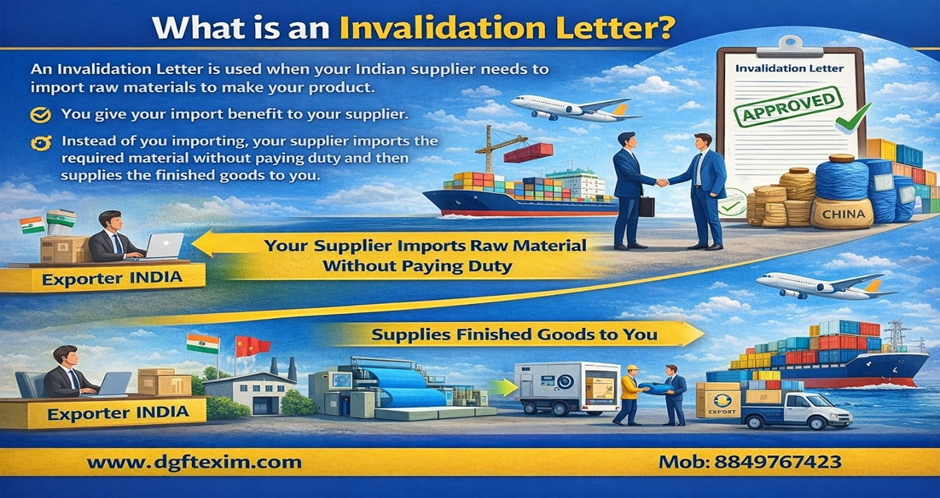
An Invalidation Letter is used when your Indian supplier needs to import raw materials to manufacture the product you require.
In simple words, you transfer the duty-free import benefit attached to your Advance Authorization to your supplier.
Example
Suppose you export office chairs and require specialized fabric.
A Surat-based fabric manufacturer can produce the fabric for you, but they need to import premium yarn from abroad.
Instead of importing the yarn yourself, you obtain an Invalidation Letter from DGFT.
Your supplier uses that letter to import the yarn duty-free, manufactures the fabric, and supplies it to you.
Best suited when the supplier needs to import inputs to fulfill your order.
What Is an Advance Release Order (ARO)?
An ARO is generally used when you purchase goods from an Indian supplier and the supplier wants to claim benefits available under the deemed exports provisions.
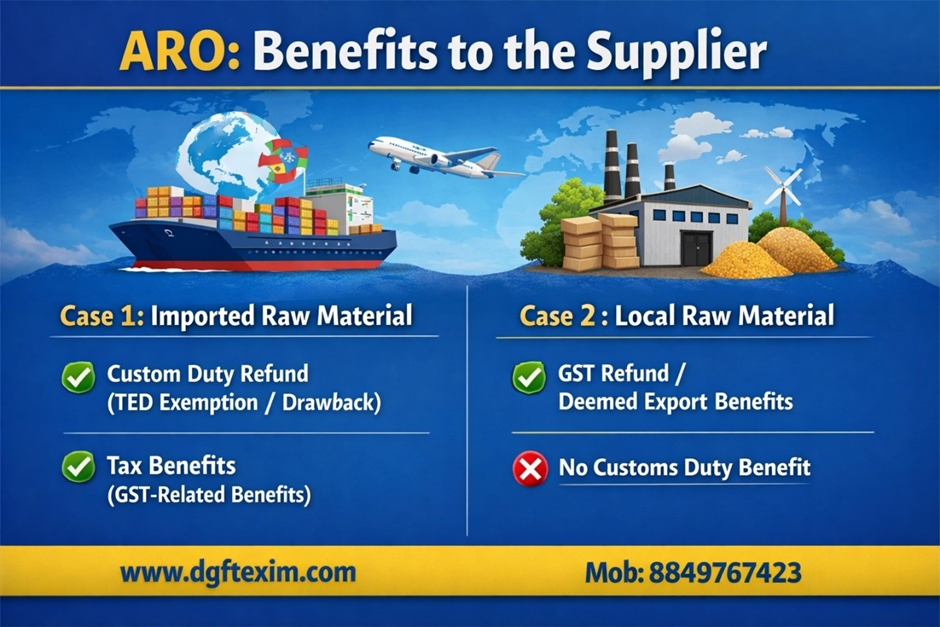
Scenario 1: Supplier Uses Imported Inputs
The supplier has imported raw materials, paid duties, and manufactures goods for you.
In this case, the supplier may claim eligible duty and tax benefits as permitted under the scheme.
Example: A packaging manufacturer imports special plastic granules, pays customs duty, manufactures export packaging, and supplies it to you under ARO.
Scenario 2: Supplier Uses Only Indian Inputs
The supplier manufactures the product entirely from locally sourced materials.
Since no imported inputs are involved, customs duty benefits do not arise. However, GST-related deemed export benefits may still be available.
Example: A box manufacturer in Ahmedabad supplies export packaging cartons made entirely from Indian paper and board.
Under ARO, they may claim applicable GST-related benefits.
The Simplest Way to Decide
Ask your supplier one question:
“Do you need to import raw materials to make my order, or are the goods already available?”
- If the supplier needs to import inputs duty-free → Invalidation Letter
- If the supplier wants to claim deemed export benefits on local supply → ARO
Why Exporters Prefer These Options
- Faster procurement compared to direct imports
- Lower freight and logistics costs
- Reduced supply chain complexity
- Better support for Indian manufacturers
- Continued eligibility for Advance Authorization benefits
Final Takeaway
Many exporters automatically think of importing under Advance Authorization. However, local procurement through an Invalidation Letter or ARO can often be more efficient and cost-effective.
Understanding the difference can save time, reduce compliance risks, and help you choose the right DGFT route for your business.