

What is a Certificate of Origin (COO)?
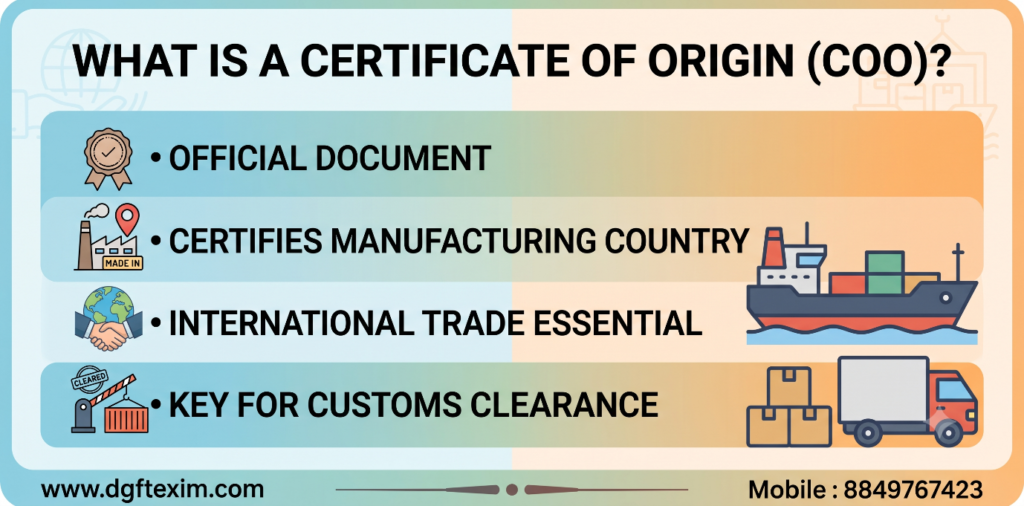
A Certificate of Origin (COO) is an important export-import document that certifies the country where goods are manufactured, produced, or processed. It helps customs authorities identify the origin of the goods and apply the correct customs duty, trade rules, or import restrictions.
COO is commonly required during international trade, customs clearance, import licensing, duty benefit claims, and trade compliance. It also helps importers prove the origin of goods to banks, customs departments, buyers, and government authorities.
In simple words, a Certificate of Origin works as proof that the exported goods belong to a particular country. It plays an important role in smooth shipment clearance and proper documentation in global trade.
There are two types of Certificate of Origin:
1. Preferential Certificate of Origin
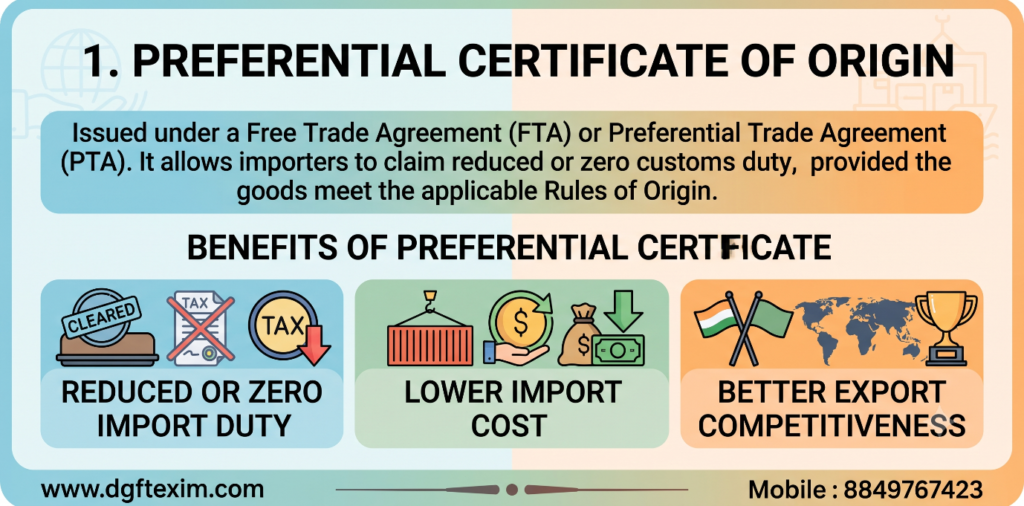
A Preferential Certificate of Origin is issued under a Free Trade Agreement (FTA) or Preferential Trade Agreement (PTA). It allows importers to claim reduced or zero customs duty, provided the goods meet the applicable Rules of Origin.
Benefits:
- Reduced or zero import duty
- Lower import cost
- Better export competitiveness
2. Non-Preferential Certificate of Origin
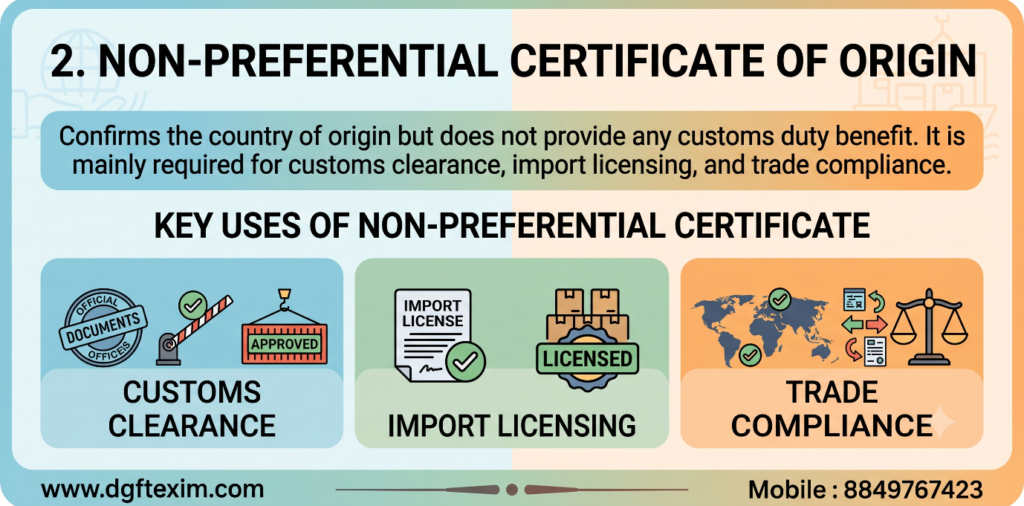
A Non-Preferential Certificate of Origin confirms the country of origin but does not provide any customs duty benefit. It is mainly required for customs clearance, import licensing, and trade compliance.
Preferential vs Non-Preferential COO
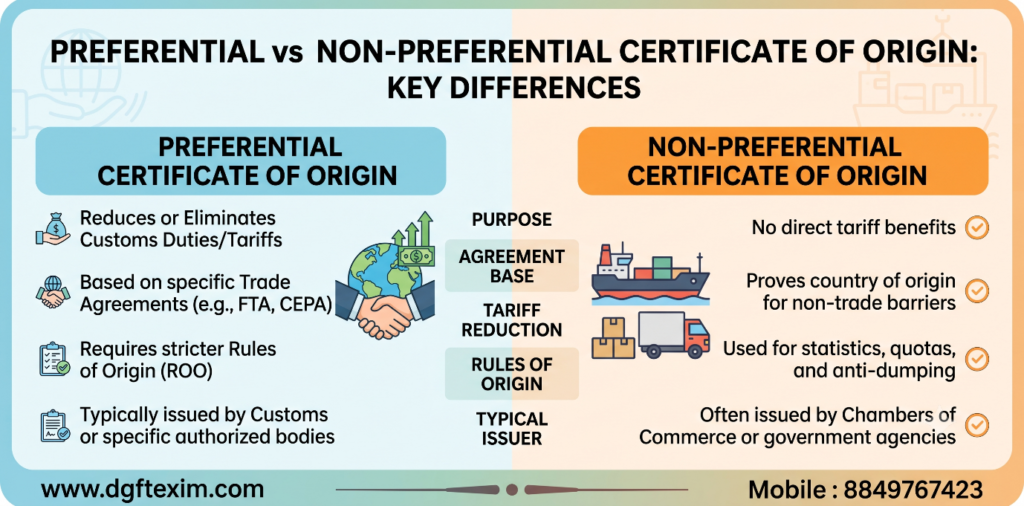
| Preferential COO | Non-Preferential COO |
| Provides duty benefits | No duty benefits |
| Issued under FTA/PTA | Used for general trade |
| Requires Rules of Origin compliance | Only certifies origin |
Conclusion
Choosing the correct Certificate of Origin is important for smooth exports and imports. A Preferential Certificate of Origin helps importers save customs duty under eligible trade agreements, while a Non-Preferential Certificate of Origin serves as proof of the product’s origin for regulatory and customs purpose