

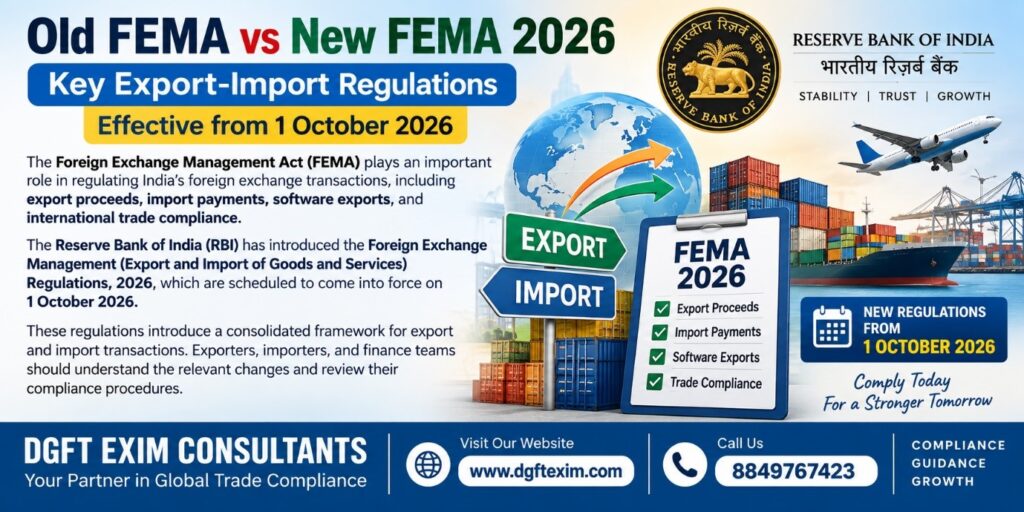
Foreign Exchange Management Act (FEMA) plays an important role in regulating India’s foreign exchange transactions, including export proceeds, import payments, software exports, and international trade compliance.
The Reserve Bank of India (RBI) has introduced the Foreign Exchange Management (Export and Import of Goods and Services) Regulations, 2026, which are scheduled to come into force on 1 October 2026.
These regulations introduce a consolidated framework for export and import transactions. Exporters, importers, and finance teams should understand the relevant changes and review their compliance procedures.
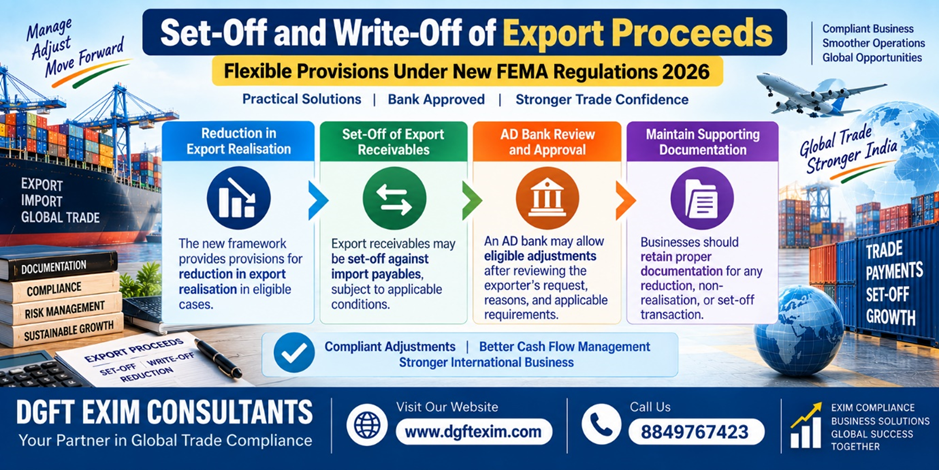
Set-Off and Write-Off of Export Proceeds
The new framework provides provisions for reduction in export realisation and set-off of export receivables against import payables.
An AD bank may allow eligible adjustments after reviewing the exporter’s request, reasons, and applicable requirements.
Businesses should retain supporting documentation for any reduction, non-realisation, or set-off transaction.
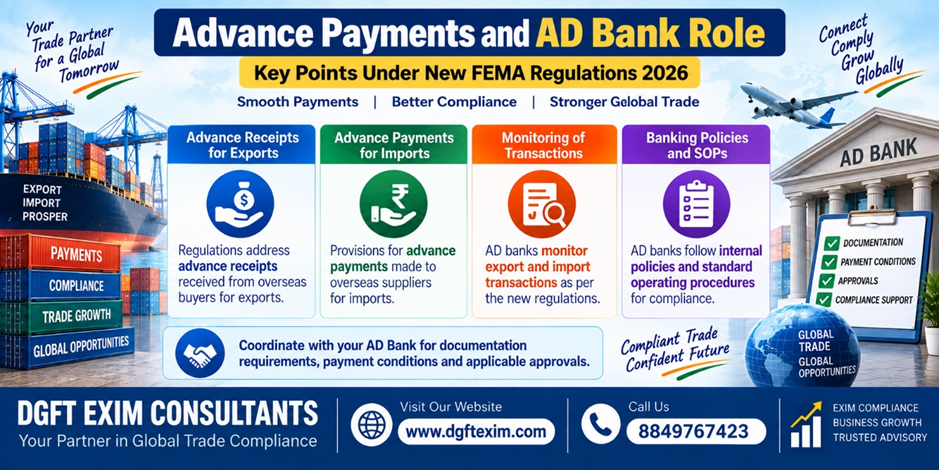
Advance Payments and AD Bank Role
The Authorised Dealer (AD) bank has an important role in monitoring and processing international trade payments.
The new regulations address:
- Advance receipts for exports.
- Advance payments for imports.
- Monitoring of export and import transactions.
- Internal banking policies and standard operating procedures.
Exporters and importers should coordinate with their AD bank to understand documentation requirements, payment conditions, and applicable approvals.
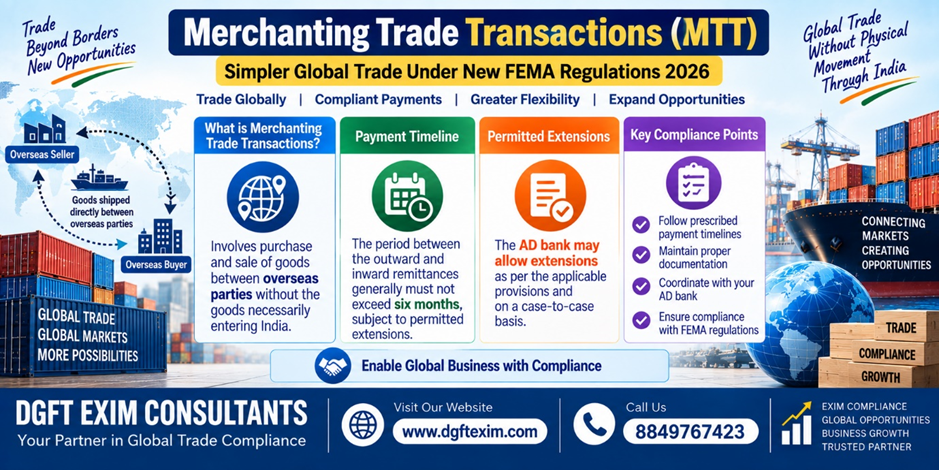
Merchanting Trade Transactions
Merchanting Trade Transactions (MTT) involve the purchase and sale of goods between overseas parties without the goods necessarily entering India.
Under the new regulations, the period between the outward and inward remittances generally must not exceed six months, subject to permitted extensions.
Businesses involved in merchanting trade should review the applicable payment timelines and documentation requirements.
Key Compliance Checklist for Exporters and Importers
Businesses should consider the following steps before the new regulations take effect:
- Review export proceeds realisation timelines.
- Check outstanding EDPMS and IDPMS entries.
- Verify the required export declaration and reporting process.
- Coordinate with the AD bank regarding payment and extension procedures.
- Update internal SOPs and compliance documentation.
- Maintain records of invoices, shipping bills, remittances, and supporting documents.
Stay updated with FEMA, RBI, DGFT, and EXIM compliance requirements.
Professional Assistance
DGFT EXIM Consultants provides professional consultancy support for DGFT, EXIM, import-export compliance, and trade documentation.