

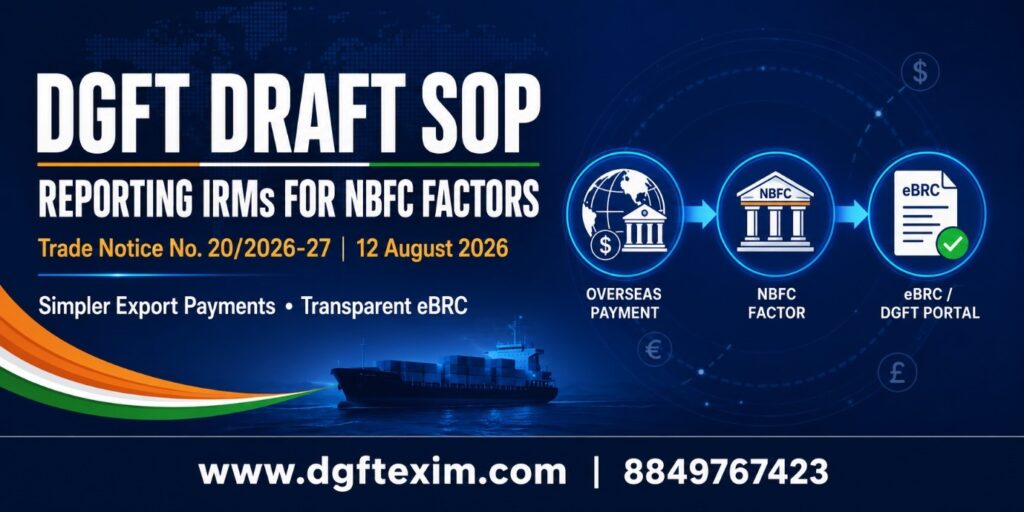
The Directorate General of Foreign Trade (DGFT) issued Trade Notice No. 20/2026-27 dated 12 August 2026, inviting comments on a Draft Standard Operating Procedure (SOP) for reporting Inward Remittance Messages (IRMs) pertaining to NBFC Factors.
The proposed SOP aims to simplify the reporting of export payments received through authorised NBFC Factors and make eBRC generation more transparent and accurate.
· What Is Export Factoring?
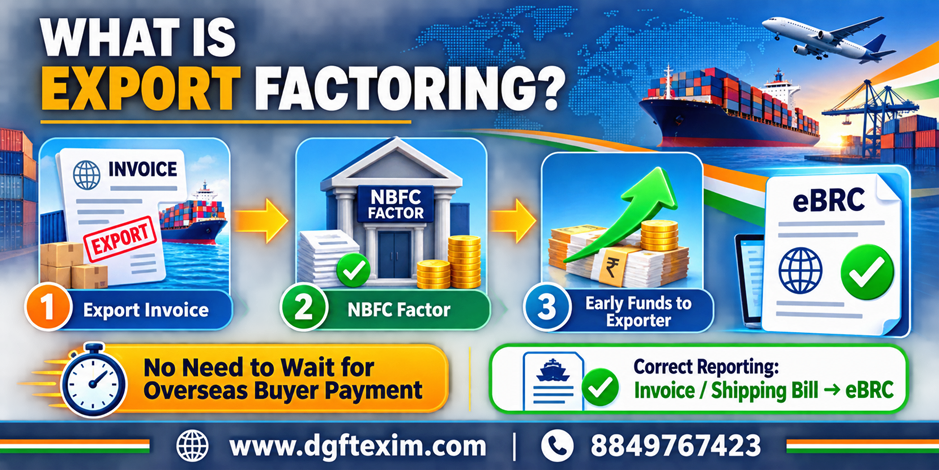
Under export factoring, an NBFC Factor provides funds to an exporter against an export invoice without requiring the exporter to wait for payment from the overseas buyer.
Correct reporting of these payments is essential for matching the remittance with the relevant invoice or Shipping Bill and generating an Electronic Bank Realisation Certificate (eBRC).
· Key Provisions of the Draft SOP
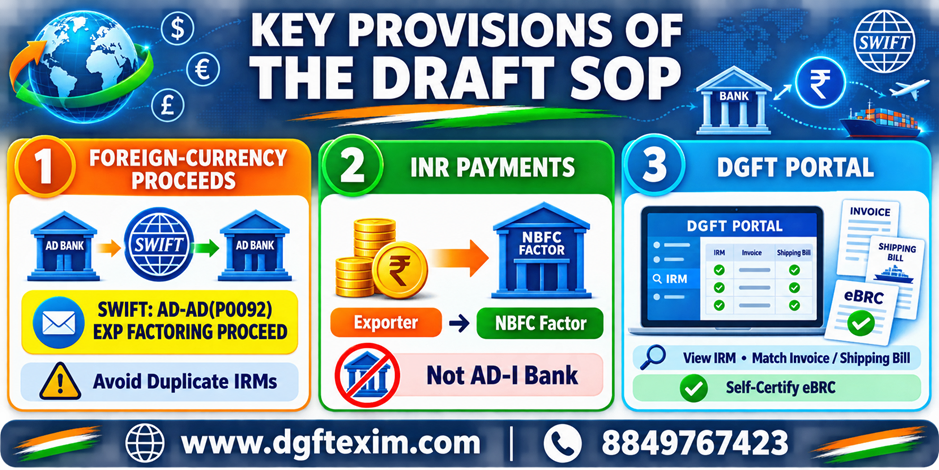
Foreign-Currency Factoring Proceeds
When an NBFC Factor remits foreign-currency factoring proceeds to an AD Category-I Bank, it must include the following prescribed text in its SWIFT message:
“AD-AD(P0092) EXP FACTORING PROCEED”
This will help the bank correctly identify the transaction and avoid creating duplicate or incorrect IRMs.
Factoring Payments Released in INR
When an export bill is discounted and the Factor releases funds in Indian Rupees, the AD-I Bank may not receive a SWIFT message.
In such cases, exporters seeking the creation of an IRM should approach the concerned NBFC Factor, rather than the AD-I Bank.
IRM Visibility on the DGFT Portal
The enhanced system will allow exporters to:
- View IRMs related to NBFC factoring transactions on the DGFT portal
- Match the remittance with the relevant invoice or Shipping Bill
- Self-certify and generate their eBRC
This is expected to improve transparency and reduce export-payment reconciliation errors.
· AD Category-II Entities
DGFT has also referred to the Foreign Exchange Management (Authorised Persons) Regulations, 2026.
Under the regulations, eligible AD Category-II entities may undertake foreign-trade transactions of up to ₹25 lakh per transaction, subject to RBI licensing and applicable conditions.

· Why Is This Important for Exporters?
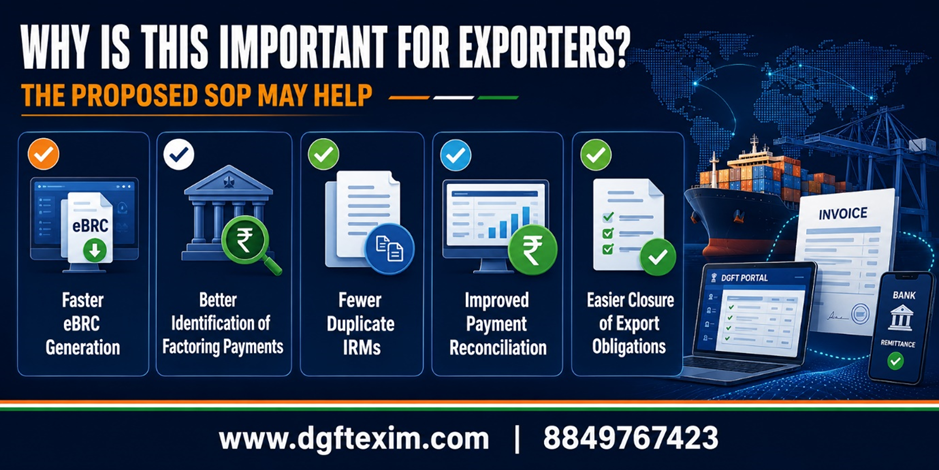
The proposed SOP may help exporters achieve:
- Faster eBRC generation
- Better identification of factoring payments
- Fewer duplicate IRMs
- Improved payment reconciliation
- Easier closure of export documentation and obligations
· Conclusion
The DGFT Draft SOP for IRMs pertaining to NBFC Factors is an important step towards simplifying export-payment reporting and eBRC self-certification.
However, exporters should note that this is currently a Draft SOP issued for consultation and not the final procedure.
For assistance with eBRC, DGFT compliance and export-payment reconciliation, contact DGFT EXIM Consultants.