

DGFT Import Policy Update 2026 has been issued through Notification No. 24/2026-27 dated 22 July 2026, updating ITC (HS) 2022 – Schedule I (Import Policy) in line with the Finance Act, 2026. DGFT has made these changes effective immediately.
Under this updateDGFT Import Policy Update 2026
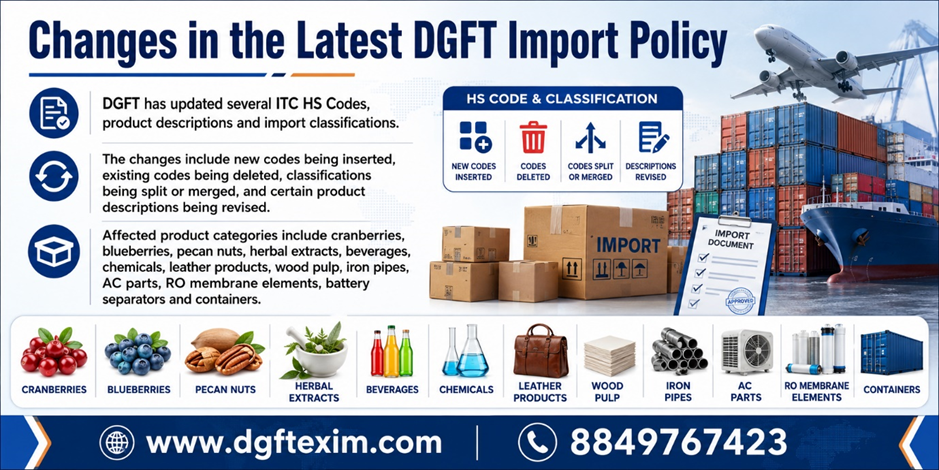
Under this update, several ITC HS Codes, product descriptions and import classifications have changed.
DGFT has inserted new codes, deleted existing codes, split or merged classifications, and revised certain product descriptions.
Affected product categories include cranberries, blueberries, pecan nuts, herbal extracts, beverages, chemicals, leather products, wood pulp, iron pipes, AC parts, RO membrane elements, battery separators and containers.
Important Information on the DGFT Import Policy Update 2026
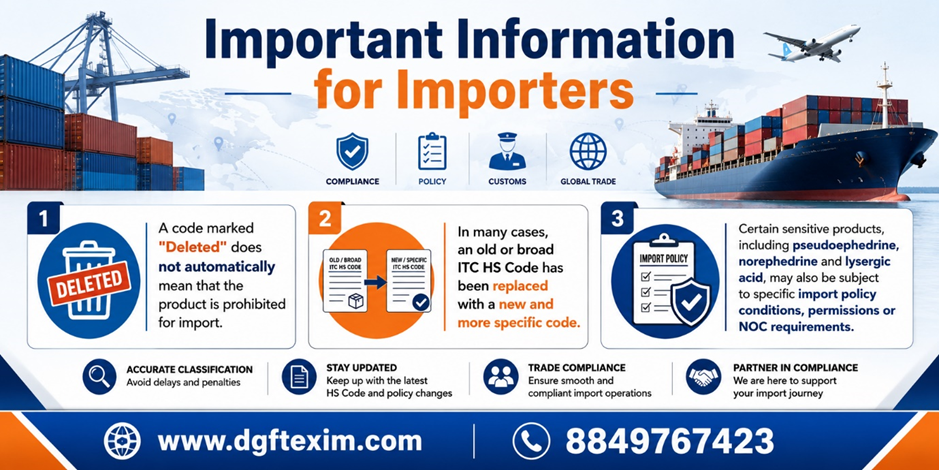
A code marked “Deleted” does not automatically mean that the product is prohibited for import.
In many cases, DGFT has replaced an old or broad ITC HS Code with a new and more specific code.
DGFT may require specific import policy conditions, permissions or NOCs for certain sensitive products, including pseudoephedrine, norephedrine and lysergic acid.
Steps Importers Should Follow
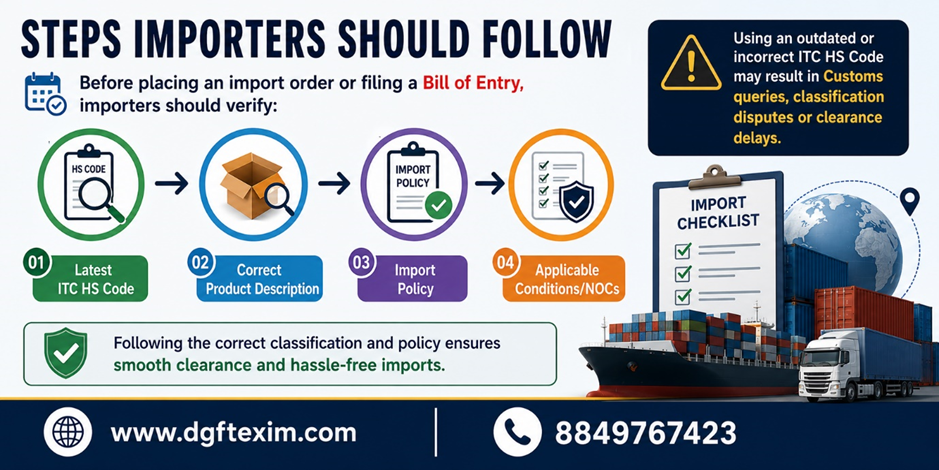
Before placing an import order or filing a Bill of Entry, importers should verify:
Latest ITC HS Code → Correct Product Description → Import Policy → Applicable Conditions/NOCs
Using an outdated or incorrect ITC HS Code may result in Customs queries, classification disputes or clearance delays.
Key Takeaway
Importers should review the latest DGFT ITC (HS) 2022 Schedule I Import Policy before shipment and ensure that the correct product classification is used.
Check the latest ITC HS Code → Verify Import Policy → Confirm applicable conditions → Proceed with import documentation.
Disclaimer: This article is for informational and educational purposes only. Always verify the latest DGFT and Customs requirements before taking any commercial or compliance decision.
Importers should also verify product-specific licensing requirements, Customs conditions and supporting documents before shipment to avoid delays and compliance issues.