What is Export Obligation (EO)?
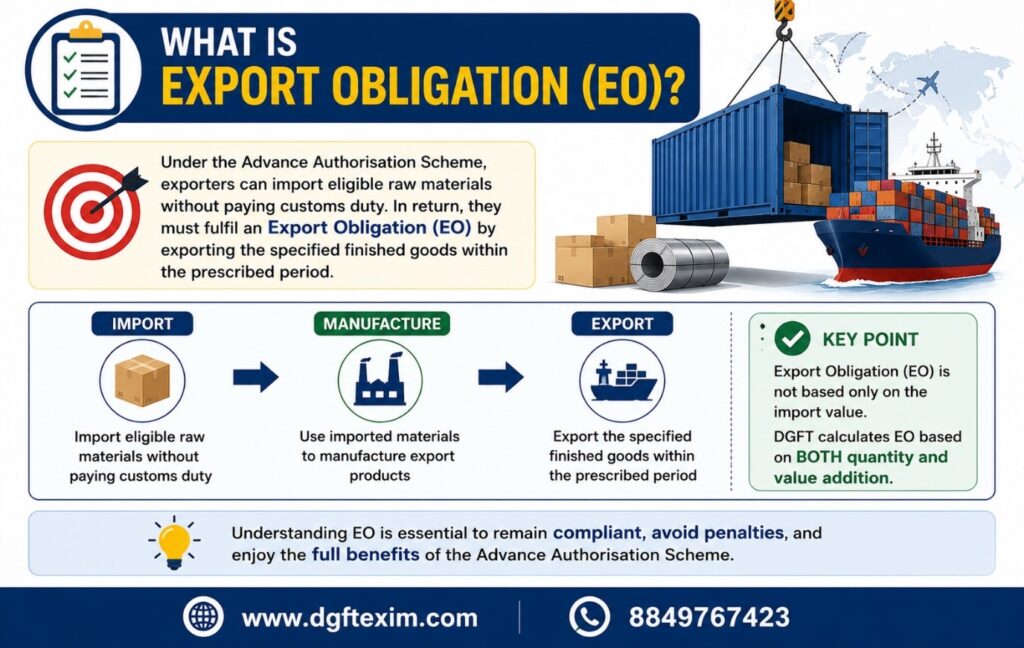
Under the Advance Authorisation Scheme, exporters can import eligible raw materials without paying customs duty. In return, they must fulfil an Export Obligation (EO) by exporting the specified finished goods within the prescribed period.
Many exporters think EO is simply based on the import value. However, DGFT calculates Export Obligation based on both quantity and value addition.
1. Export Obligation Based on Quantity
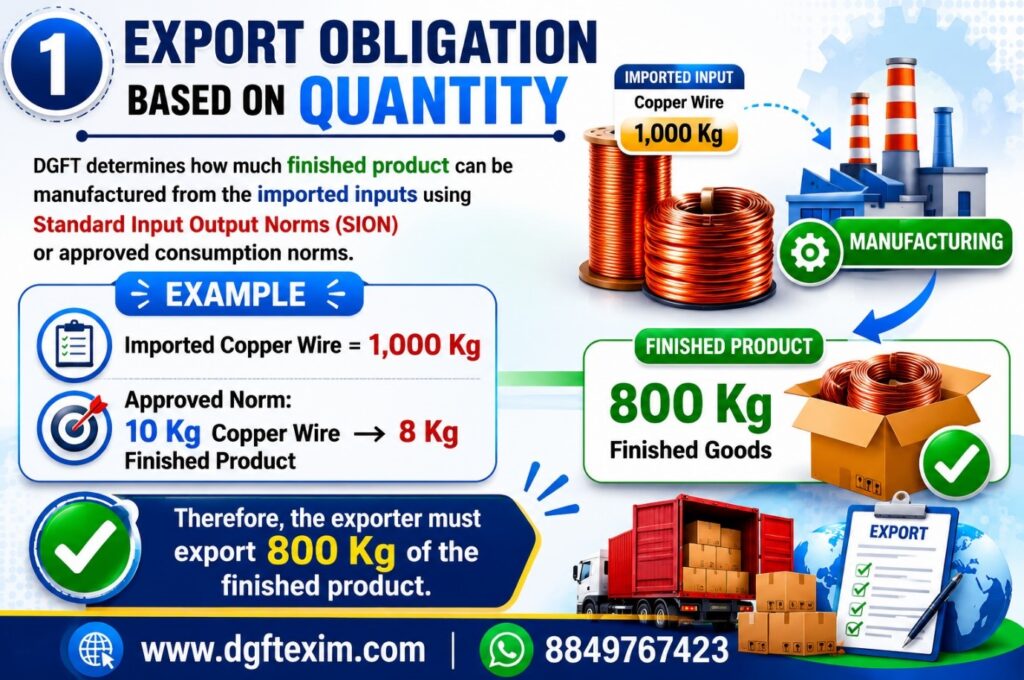
DGFT determines how much finished product can be manufactured from the imported inputs using Standard Input Output Norms (SION) or approved consumption norms.
Example:
- Imported Copper Wire = 1,000 Kg
- Approved Norm: 10 Kg Copper Wire → 8 Kg Finished Product
Therefore, the exporter must export 800 Kg of the finished product.
2. Export Obligation Based on Value Addition
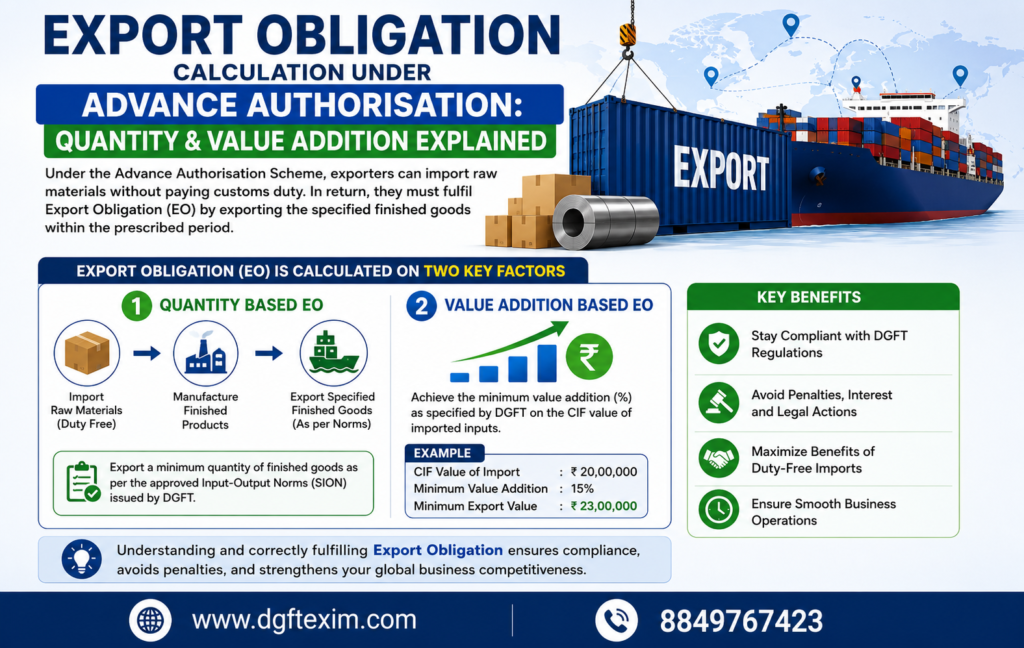
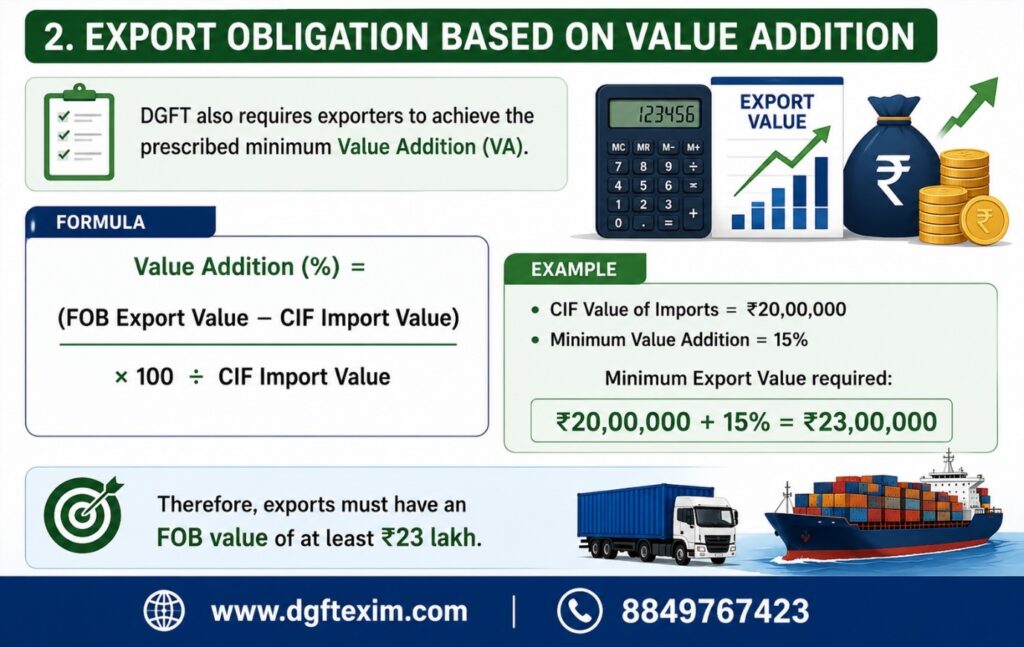
DGFT also requires exporters to achieve the prescribed minimum Value Addition (VA).
Formula:
Value Addition (%) = (FOB Export Value − CIF Import Value) × 100 ÷ CIF Import Value
Example:
- CIF Value of Imports = ₹20,00,000
- Minimum Value Addition = 15%
Minimum Export Value required:
₹20,00,000 + 15% = ₹23,00,000
Therefore, exports must have an FOB value of at least ₹23 lakh.
Conclusion
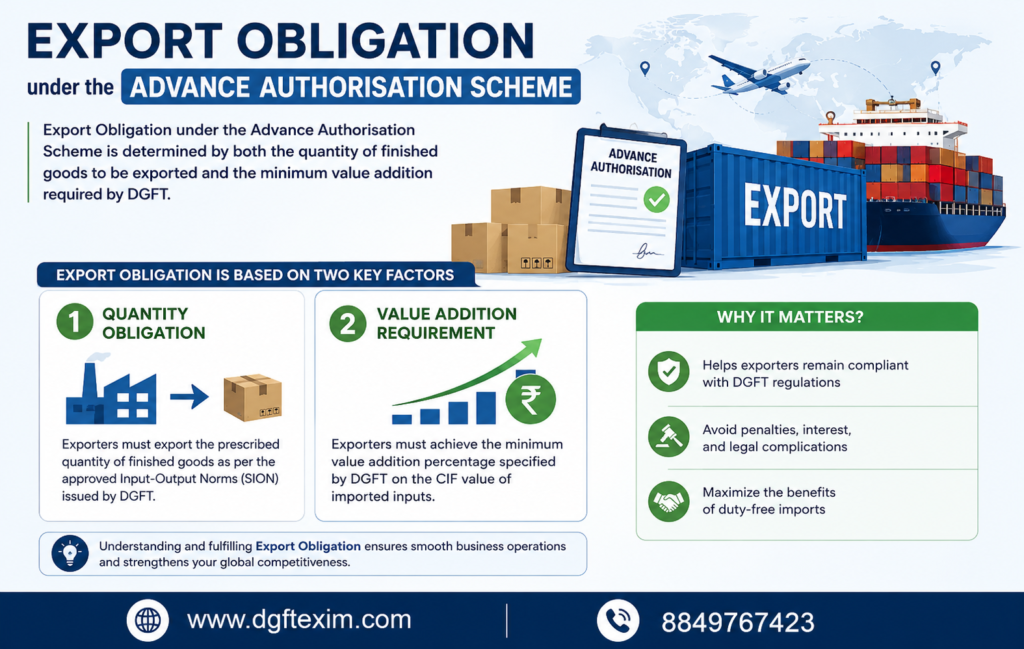
Export Obligation under the Advance Authorisation Scheme is determined by both the quantity of finished goods to be exported and the minimum value addition required by DGFT. Understanding these requirements helps exporters remain compliant, avoid penalties, and maximize the benefits of duty-free imports.