

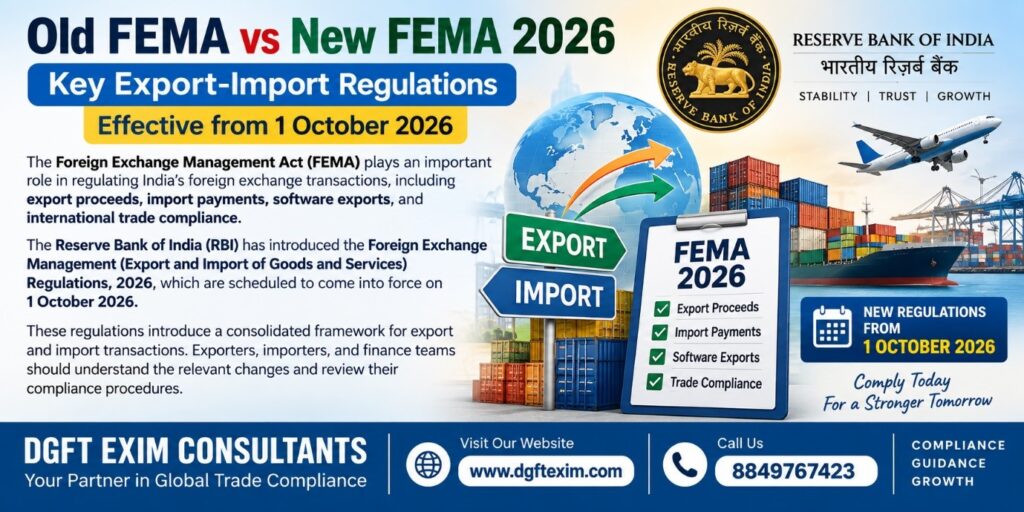
The Foreign Exchange Management Act (FEMA) regulates India’s foreign exchange transactions, including export proceeds, import payments, software exports, and international trade compliance.
The Reserve Bank of India (RBI) has introduced the Foreign Exchange Management (Export and Import of Goods and Services) Regulations, 2026, which will come into force on 1 October 2026.
These regulations establish a consolidated framework for export and import transactions. Exporters, importers, and finance teams should review the changes and update their compliance procedures to meet the new requirements.
EDPMS and IDPMS Compliance
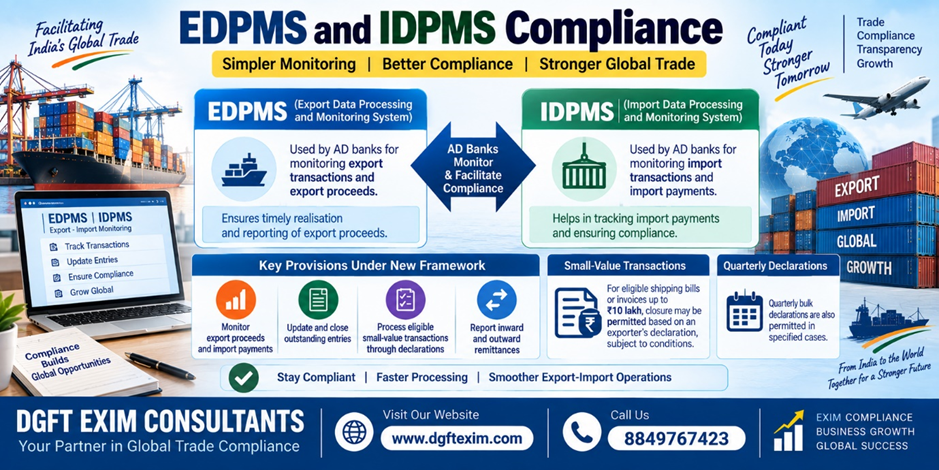
AD banks use EDPMS (Export Data Processing and Monitoring System) and IDPMS (Import Data Processing and Monitoring System) to monitor export and import transactions.
The new framework includes provisions for:
- Monitoring export proceeds and import payments.
- Updating and closing outstanding entries.
- Processing eligible small-value export and import transactions through declarations.
- Reporting inward and outward remittances.
For eligible shipping bills or invoices up to ₹10 lakh, the AD bank may close the entry based on the exporter’s declaration.
The bank must also follow the applicable conditions. In specified cases, exporters may submit quarterly bulk declarations.
Small-Value Export and Import Transactions
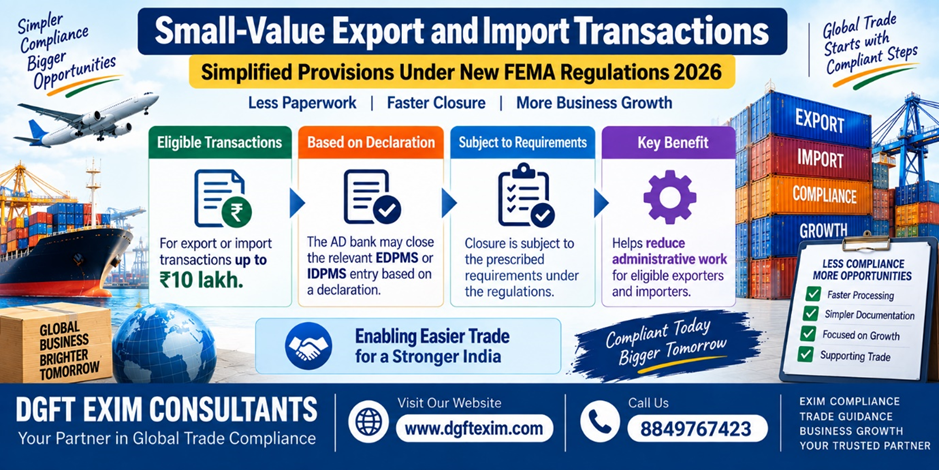
The new regulations introduce simplified provisions for eligible small-value transactions.
For transactions up to ₹10 lakh, the AD bank may close the relevant EDPMS or IDPMS entry based on an exporter’s or importer’s declaration, subject to the prescribed requirements.
These provisions can reduce administrative work for eligible exporters and importers. They also simplify compliance procedures.
For updates on DGFT notifications, EXIM compliance, and import-export consultancy, stay connected with DGFT EXIM Consultants.