

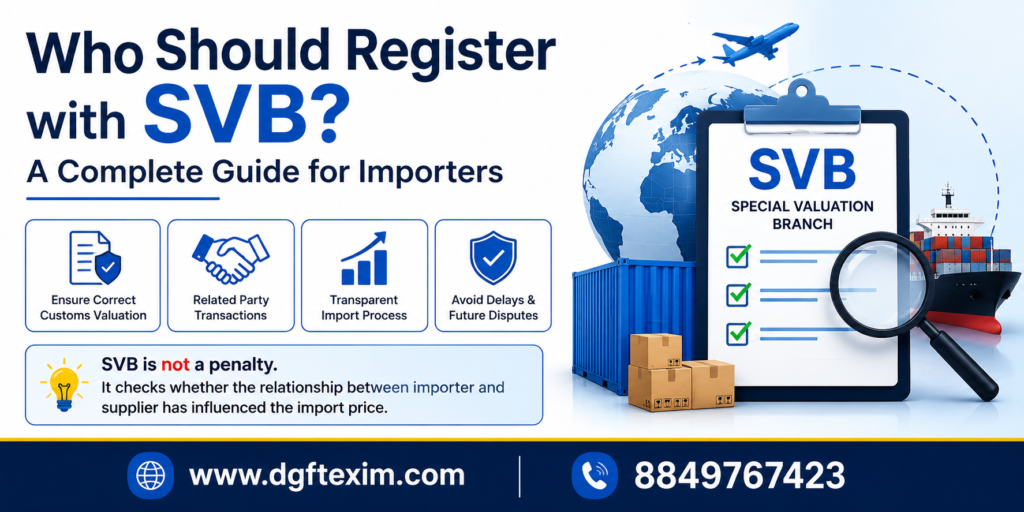
If your company imports goods from a foreign supplier that is connected to your business, you may have heard about Special Valuation Branch (SVB).
Many importers think that SVB registration means higher customs duty. However, this is one of the biggest misconceptions.
SVB is not a penalty. It is a Customs valuation mechanism used to determine whether the relationship between the importer and the foreign supplier has influenced the import price.
In this guide, we’ll explain who should register with SVB, using simple language and practical business examples.
What is Special Valuation Branch (SVB)?
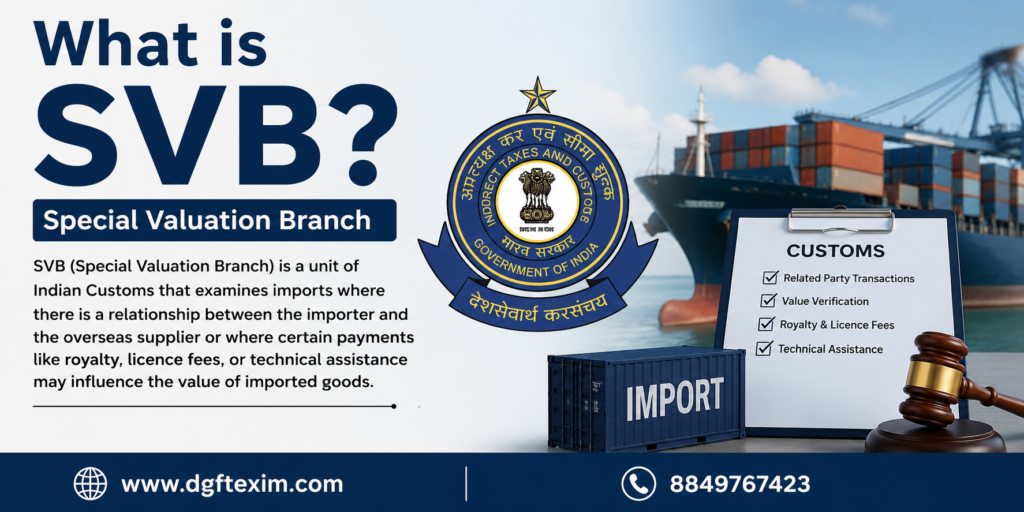
The Special Valuation Branch (SVB) is a specialized unit of Indian Customs that examines imports where there is a relationship between the importer and the overseas supplier, or where agreements such as royalty, technical collaboration, trademark licensing, or technical assistance may affect the customs value of imported goods.
Its primary objective is to determine whether the declared transaction value can be accepted under the Customs Valuation Rules.
Why Does Customs Check Related Party Transactions?
Imagine this situation.
A company in Germany owns a company in India.
The German company exports machinery worth ₹1 crore.
Instead of invoicing ₹1 crore, it invoices only ₹70 lakh.
If Customs accepts the lower invoice value without verification, the importer may pay lower customs duty.
Therefore, Customs examines whether the relationship between the buyer and seller has influenced the price.
This is exactly where SVB comes into the picture.
Who Should Register with SVB?
Under the Customs Valuation Rules, importers may be required to undergo SVB examination if they have a specified relationship with the foreign supplier or if certain agreements exist that may influence the import value.
Below are the most common situations.
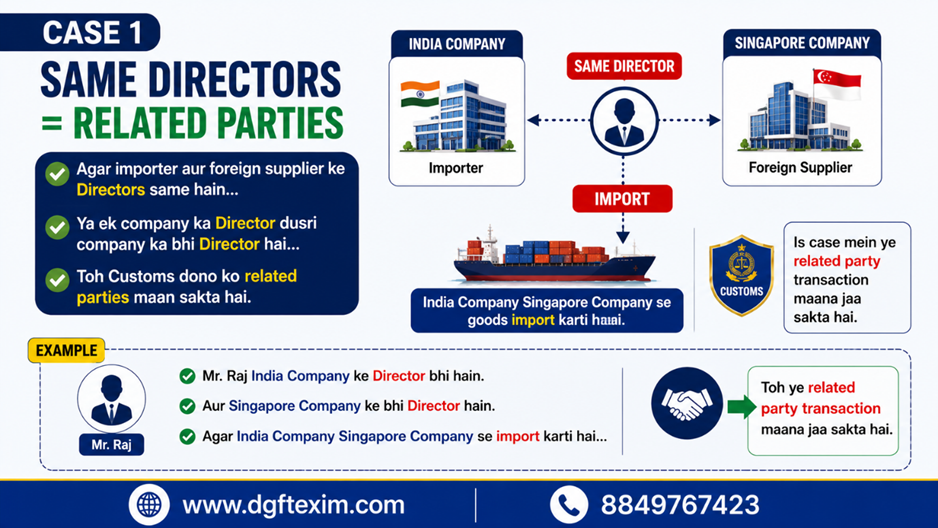
1. Same Directors
If the importer and foreign supplier have the same directors, or one company’s director is also a director in the other company, Customs may consider them related parties.
Example
Mr. Raj is a director of:
- ABC India Pvt. Ltd.
- ABC Singapore Pte. Ltd.
If ABC India imports goods from ABC Singapore, Customs may examine whether the declared price has been influenced by this relationship.
2. Business Partners
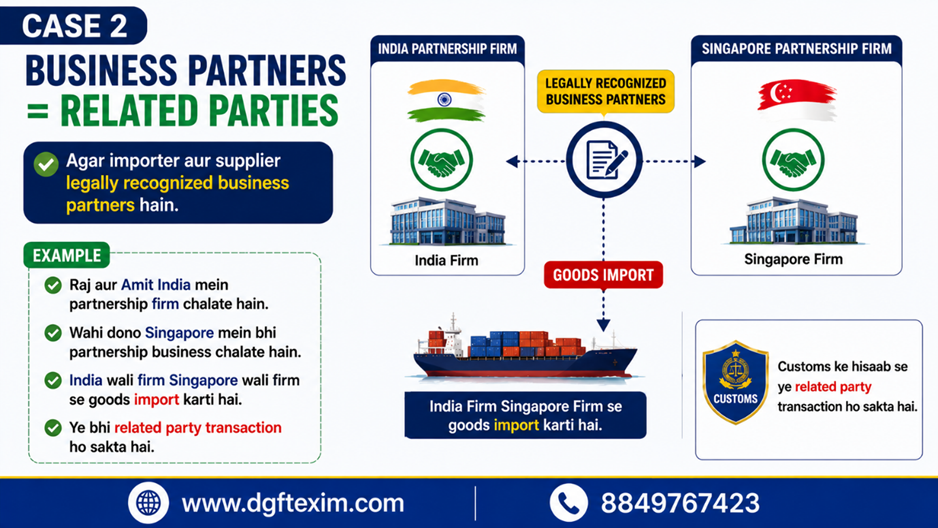
Legally recognized business partners are also considered related persons under Customs valuation rules.
Example
Raj and Amit operate:
- A partnership firm in India
- Another partnership firm in Singapore
If the Indian partnership imports goods from the Singapore partnership, Customs may examine the transaction under SVB.
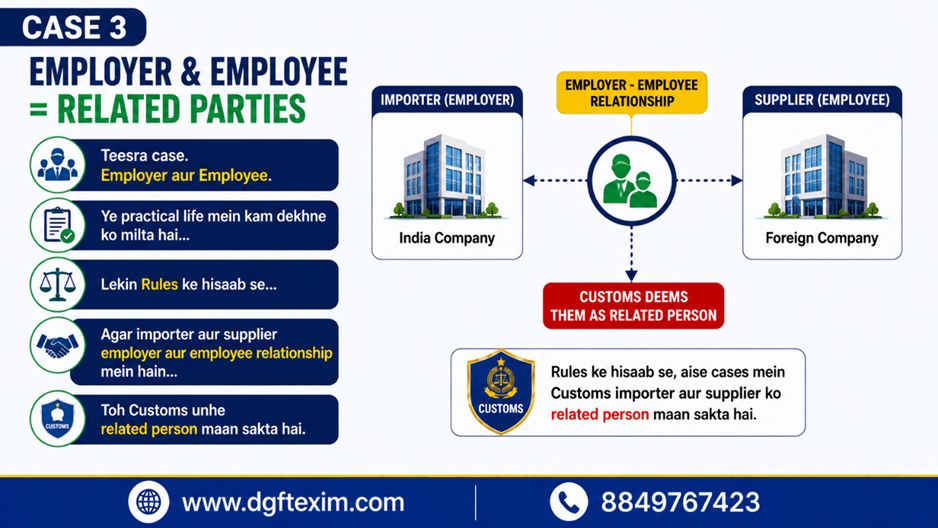
3. Employer and Employee Relationship
Although uncommon in international trade, Customs rules also recognize employer-employee relationships.
If the importer and supplier have such a relationship, Customs may treat them as related persons.
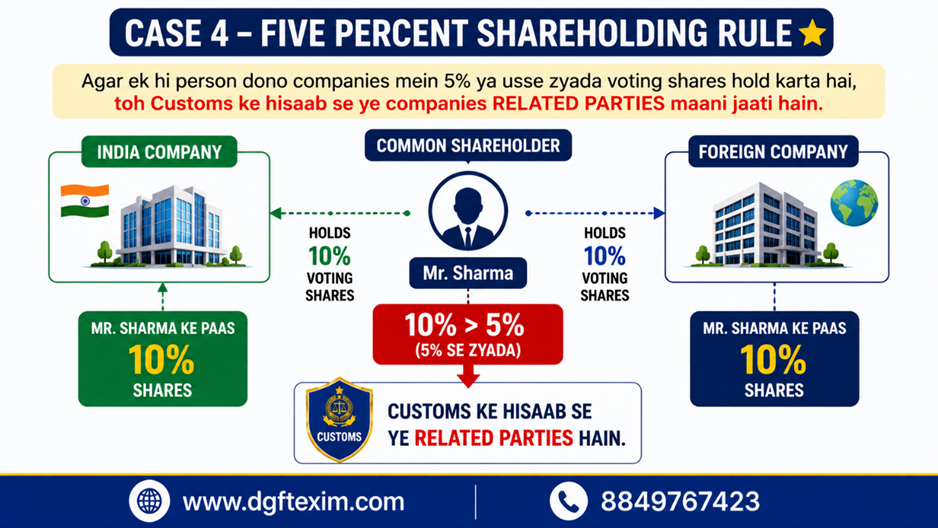
4. Common Shareholding (5% Voting Rights Rule)
This is one of the most important SVB provisions.
If any individual or entity directly or indirectly owns 5% or more voting shares in both the importer and the foreign supplier, the parties may be considered related.
Example
Mr. Sharma owns:
- 10% voting shares in India Company
- 10% voting shares in Foreign Company
Since the same person owns more than 5% in both companies, Customs may classify them as related parties.
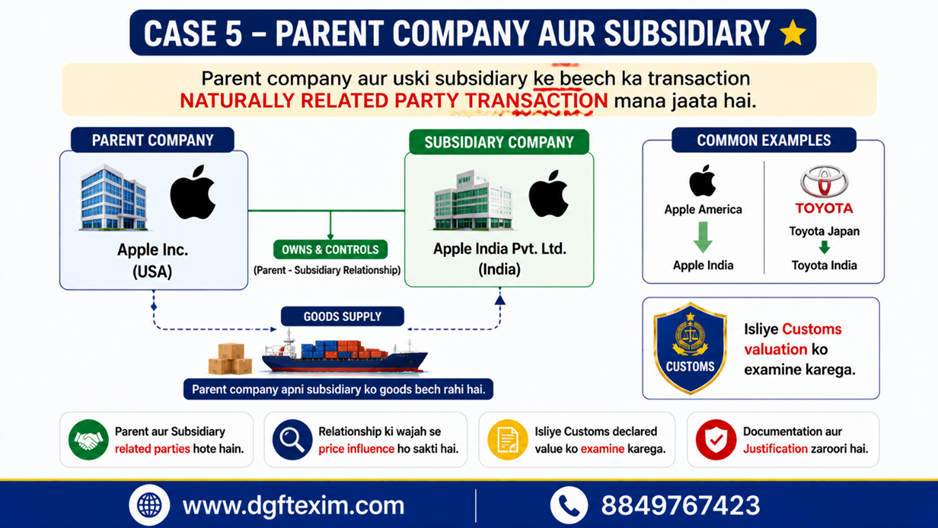
5. Parent Company and Subsidiary
This is the most common type of related-party import.
Examples
- Apple Inc. USA → Apple India
- Toyota Japan → Toyota India
- Siemens Germany → Siemens India
Whenever a parent company supplies goods to its subsidiary, Customs may examine whether the declared import price is influenced by the corporate relationship.
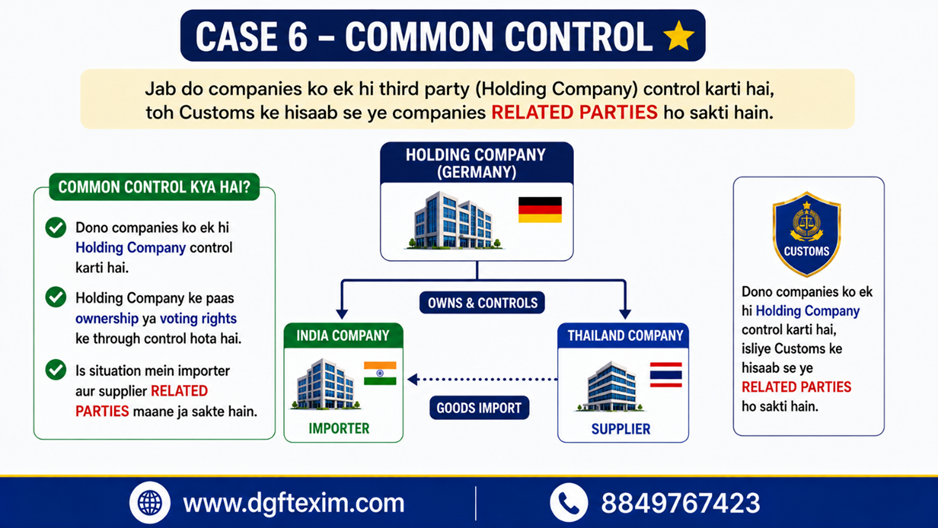
6. Common Control
Two companies may also be considered related if they are controlled by the same holding company.
Example
Holding Company (Germany)
India Company
Thailand Company
If India Company imports goods from Thailand Company, and both companies are controlled by the same German holding company, Customs may classify them as related parties.
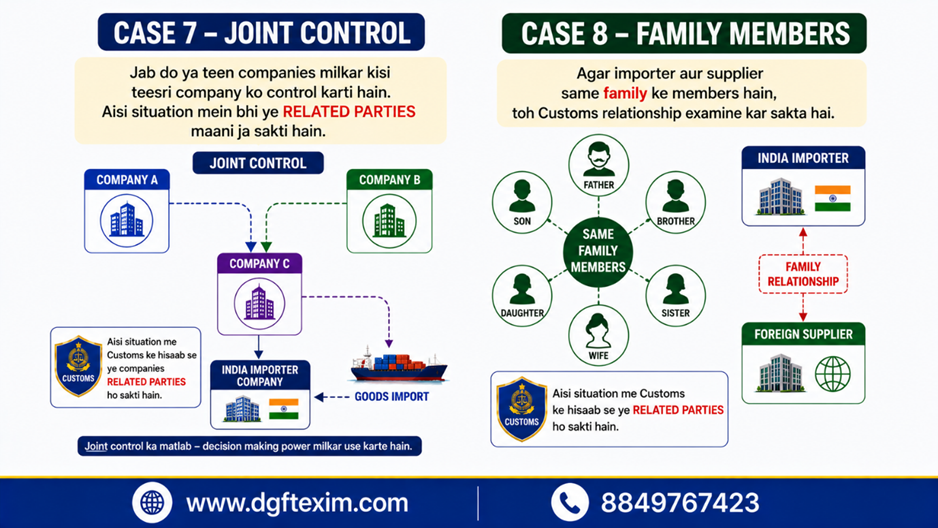
7. Joint Control
Sometimes two or more companies jointly control another company.
In such situations, Customs may also treat the parties as related depending upon the ownership and control structure.
8. Family Members
Family relationships can also create related-party transactions.
Examples include:
- Father
- Mother
- Son
- Daughter
- Brother
- Sister
- Husband
- Wife
If the importer and foreign supplier belong to the same family, Customs may examine whether the relationship has affected the transaction value.
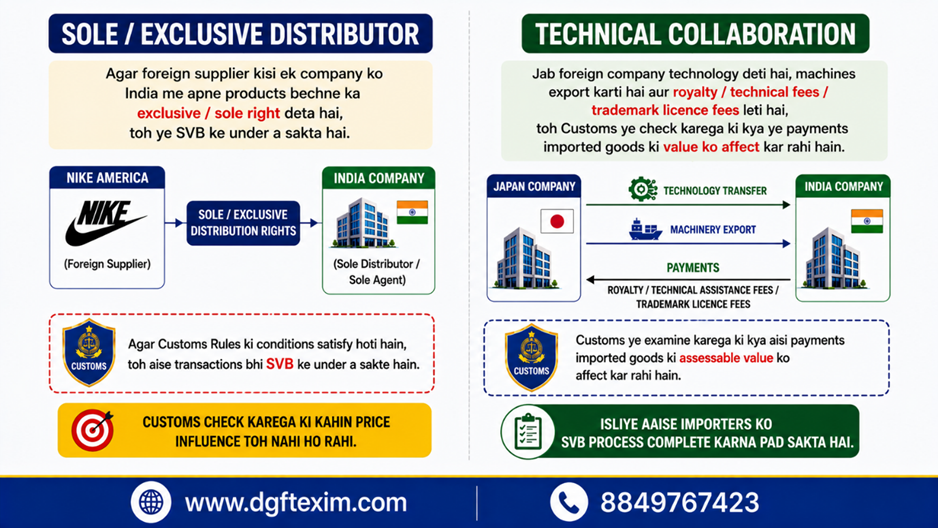
9. Sole Distributor, Sole Agent or Exclusive Distributor
If a foreign supplier appoints only one company to distribute or sell its products in India, Customs may examine such arrangements.
Example
A global manufacturer appoints one Indian company as its exclusive distributor.
If the conditions under the Customs Valuation Rules are satisfied, the transaction may require SVB examination.
10. Technical Collaboration Agreements
Many companies receive technology, technical know-how, or engineering support from overseas suppliers.
These agreements are also reviewed under SVB.
Examples include:
- Technical Collaboration Agreement
- Technical Assistance Agreement
- Technology Transfer Agreement
- Know-how Agreement
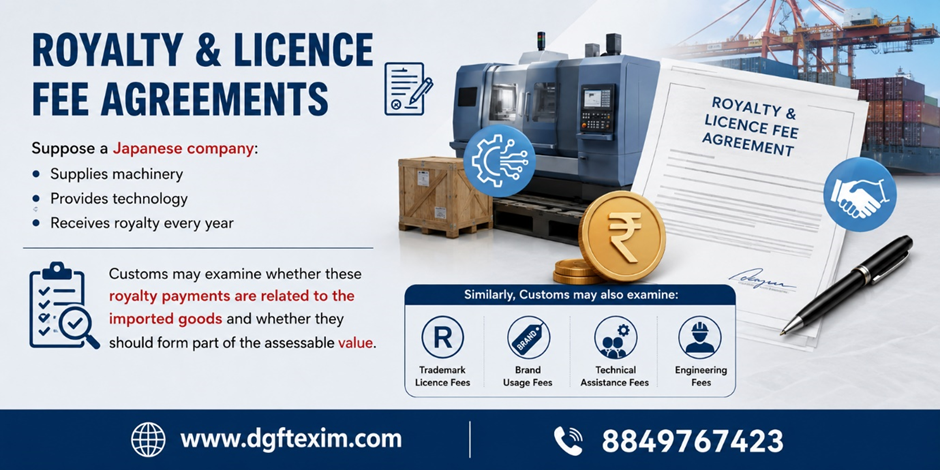
11. Royalty and Licence Fee Agreements
Suppose a Japanese company:
- Supplies machinery
- Provides technology
- Receives royalty every year
Customs may examine whether these royalty payments are related to the imported goods and whether they should form part of the assessable value.
Similarly, Customs may also examine:
- Trademark Licence Fees
- Brand Usage Fees
- Technical Assistance Fees
- Engineering Fees
Frequently Asked Questions (FAQs)
Is SVB registration mandatory for every importer?
No. SVB generally applies where the importer and supplier are related under the Customs Valuation Rules or where certain agreements may influence the import value.
Does every related-party transaction result in higher customs duty?
No. Customs only verifies whether the relationship has influenced the declared price.
Does royalty always become part of customs value?
Not always. Whether royalty is includible depends on the terms of the agreement and the applicable Customs Valuation Rules.
Can imports continue during SVB proceedings?
Yes. Imports generally continue while Customs examines the valuation, subject to applicable procedures.